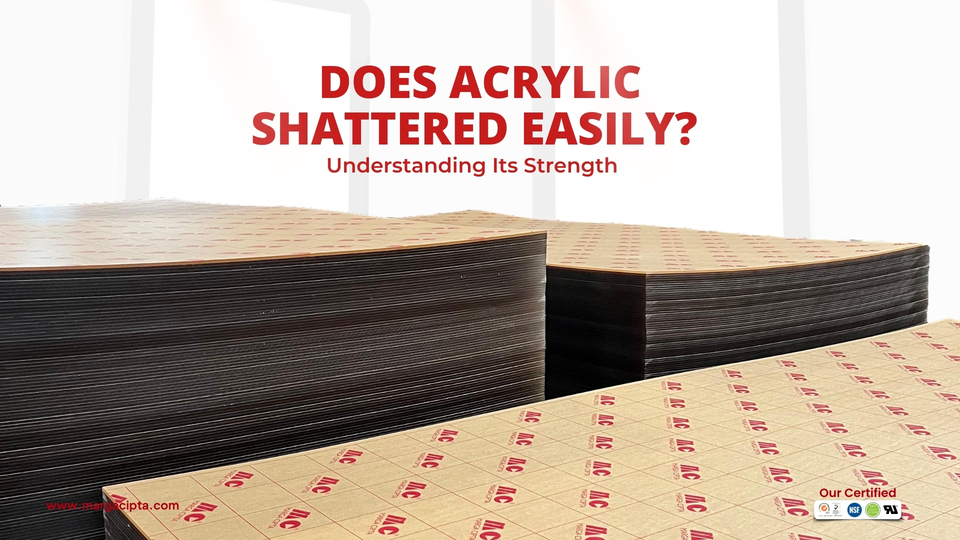
Does Acrylic Shatter? Find Out Its Strength and Durability

Informational

When comparing materials like glass and plastic, many people often ask: does acrylic shatter? The short answer is no, acrylic does not shatter like traditional glass. Instead, acrylic is designed to be far stronger, safer, and more durable. 

This makes it one of the most widely used materials across industries such as architecture, signage, interior design, and safety barriers.

Does Acrylic Shatter Like Glass?

Unlike glass, which can break into dangerous sharp shards, acrylic is impact resistant

If exposed to heavy force, acrylic is more likely to crack or break into large, blunt-edged pieces rather than splintering into tiny shards. This makes acrylic significantly safer for residential or commercial applications.

In fact, acrylic is up to 17 times stronger than glass, yet weighs only half as much. This balance of strength and lightness explains why industries worldwide are shifting toward acrylic as a glass alternative.

Read also: Do’s and Don’ts: Cleaning Acrylic Sheet the Right Way

Why Acrylic Is Safer Than Glass

The concern about shattering usually comes from using glass in high-risk environments. Glass windows, panels, and displays can be dangerous when broken. Acrylic solves this problem by offering:

  1. High Impact Resistance: Acrylic can withstand accidental knocks, falls, or collisions without shattering dangerously.
  2. Blunt Break Pattern: When acrylic does break, it forms larger, less hazardous fragments.
  3. Safe for Child and Public Environment: Because of its break-resistant nature, acrylic is commonly used in schools, hospitals, public displays, and even aquariums.

Factors That Affect Acrylic’s Durability

Although acrylic is strong, certain factors can influence whether it cracks or breaks under pressure:

  • Thickness of the Sheet: Thicker acrylic sheets are more resistant to cracking and can endure higher loads.
  • Quality of the Material: Sheets made from 100% virgin MMA (Methyl Methacrylate) are purer and more durable than those made with recycled material.
  • Environmental Conditions: Outdoor exposure to UV light, heat, and moisture can impact longevity if low-quality acrylic is used.
  • Installation and Handling: Proper cutting, drilling, and mounting prevent stress points that could cause cracking.

Real-World Applications of Acrylic

Thanks to its non-shattering nature, acrylic is a trusted material in industries that prioritize both safety and aesthetics:

  • Signage and Advertising Displays – Durable and weather-resistant, perfect for outdoor use.
  • Protective Barriers – Used in offices, retail counters, and public spaces to ensure safety without sacrificing visibility.
  • Construction and Architecture – Commonly found in windows, skylights, and partitions for their lightweight yet strong properties.
  • Furniture and Interior Design – Adds a modern, glass-like aesthetic without the fragility.
  • Medical and Food Industry – Acrylic with certifications like NSF ensures hygienic and safe usage.

Read also: Acrylic Sheet Thickness Guide: How to Choose the Right One

Does Acrylic Shatter Under Extreme Conditions?

While acrylic does not shatter like glass, it is not indestructible. Under extreme force or improper installation, acrylic may crack or snap. However, the breakage is still significantly safer than glass since it does not form sharp, splintered fragments.

In most cases, acrylic offers the perfect balance of strength, clarity, and cost-effectiveness.

So, does acrylic shatter? No, acrylic is designed to be a safer, stronger alternative to glass. With up to 17 times the strength of glass and excellent durability, acrylic is widely trusted in signage, construction, safety barriers, and interior design. 

While it may crack under extreme conditions, its breakage is far less hazardous compared to glass, making it a reliable choice for both commercial and residential applications.

PT Margacipta Wirasentosa offers high-quality cast acrylic made from 100% virgin MMA, with NSF-certified options for food contact applications.
News Release

Acrylic for Art and Crafts, Endless Creativity Only for You

In the world of art and design, materials play a huge role in how ideas come to life. One material that continues to gain popularity among artists, hobbyists, and designers is acrylic sheet, especially cast acrylic.

Strong, crystal-clear, and easy to shape, cast acrylic opens up limitless creative possibilities.

Whether it’s for painting, laser engraving, sculpture, or DIY crafts, acrylic has become a go-to choice for many creators looking to blend durability with beauty.

What Makes Cast Acrylic Ideal for Art and Crafts?

Cast acrylic sheets are known for their clarity, strength, and versatility

Compared to extruded acrylic, cast acrylic has a smoother surface, higher optical transparency, and can be cut, engraved, or polished without losing quality.

Here’s why artists and crafters love using cast acrylic:

  • Exceptional Clarity: Delivers glass-like transparency that enhances the look of every design.
  • Lightweight yet Strong: Easier to handle than glass but highly durable against impact.
  • Easy to Cut and Shape: Can be laser cut, drilled, or bent into creative forms.
  • UV Resistant: Maintains color and clarity even under sunlight.
  • Available in Various Colors and Finishes: From transparent to opaque, fluorescent to matte. Perfect for artistic flexibility.

Read also: Acrylic Ideas for Home Decor You'll Love

Popular Art and Craft Applications of Acrylic

1. Laser-Cut Art Pieces

Artists often use acrylic sheets for laser-cut wall art or intricate decorative panels. 

The precision of acrylic cutting allows for detailed, modern designs that are difficult to achieve with other materials.

2. Acrylic Painting Boards

Clear cast acrylic is also used as an alternative painting surface. 

Its smooth, non-porous texture gives artists a unique base for acrylic or oil-based paints, adding a glossy and modern finish to artworks.

3. Resin and Mixed Media Art

Many creators combine acrylic sheets with resin, wood, or metal for mixed-media projects. The transparency of acrylic allows layering and depth that enhances visual effects.

4. DIY Home Décor and Craft Projects

From custom coasters and photo frames to desk nameplates and keychains, acrylic sheets are perfect for DIY enthusiasts. 

They can be engraved, painted, or printed on, offering endless creative potential.

5. Sculptures and Installations

Artists use thicker cast acrylic sheets to craft sculptures that play with light and color. Its glass-like quality adds elegance, while the material’s strength ensures long-lasting displays.

Read also: Acrylic vs Polycarbonate: Which One Should You Use?

Why Choose MC® Cast Acrylic Sheets

PT Margacipta Wirasentosa is one of Indonesia’s leading manufacturers of high-quality cast acrylic sheets, used in various industries including art, architecture, and interior design.

Our acrylic sheets are:

  • Produced with precision to ensure consistent thickness and clarity.
  • Available in a wide range of colors, sizes, and finishes to match any creative vision.
  • Durable and safe, perfect for both professional art installations and hobby crafts.

With Marga Cipta, every sheet is designed to help you express creativity without limits, combining aesthetics with long-lasting performance.

Acrylic isn’t just a functional material, it’s a canvas for creativity. With cast acrylic sheets from Marga Cipta, artists and crafters can explore new forms of expression that combine strength, beauty, and innovation.

Acrylic vs Polycarbonate: Which One Should You Use?

When choosing a plastic sheet for your project, two materials often come to mind: acrylic and polycarbonate. While both are widely used for signage, protective panels, and displays, the decision between them depends on what matters most: strength, clarity, or cost.

In this article, we compare acrylic and polycarbonate across key aspects and explain why acrylic may be the better solution for most everyday applications.

Strength: Durable, But Do You Need Extreme Impact Resistance?

Polycarbonate is often praised for its extreme impact resistance—up to 250 times stronger than glass. It’s frequently used in bulletproof windows, riot shields, and industrial machinery guards. If you're designing for high-risk environments with potential heavy impact, polycarbonate might make sense.

But here’s the reality: most applications don't need that level of impact resistance.

Acrylic, though not as tough as polycarbonate, is still up to 10 times stronger than glass. For general uses like signage, display cases, skylights, or protective barriers, acrylic offers more than enough durability without the extra cost.

Read also: Benefits of Using Clear Cast Acrylic Sheet

Clarity: Acrylic Offers Superior Visual Appeal

When it comes to optical clarity, acrylic takes the lead. Acrylic sheets provide up to 92% light transmission, giving them a crystal-clear, glass-like appearance. They’re less likely to yellow over time and are known for maintaining their clarity in outdoor and indoor environments.

Polycarbonate, on the other hand, may appear slightly duller and can develop a yellowish tint after prolonged exposure to UV light—unless treated with an extra coating.

If visual presentation matters, especially in retail, architectural, or decorative use, acrylic is the smarter choice.

Cost: Acrylic is More Budget-Friendly

From a pricing perspective, acrylic is generally more affordable than polycarbonate.

For businesses or projects that need large-scale installations—like signage, partitions, or decorative panels—acrylic provides an ideal balance of performance and price.

Polycarbonate’s high cost only makes sense when extreme toughness is necessary. For most users, choosing acrylic means getting a high-quality material without overspending.

Ease of Fabrication and Maintenance

Another advantage of acrylic is how easy it is to cut, drill, polish, and thermoform. You’ll get cleaner cuts and smoother edges, making it perfect for projects that require precision or aesthetic finishes.

Polycarbonate is tougher to work with and prone to scratches without special care. Acrylic is also easier to clean and maintain, requiring only mild soap and water.

Read also: Why Cast Acrylic Is Better Than Glass: Benefits You Should Know

When Should You Choose Acrylic?

Unless you’re building for high-impact or industrial-grade applications, acrylic is the practical, beautiful, and cost-effective option. It's the go-to choice for:

  • Retail displays and signage

  • Home and office decor

  • Windows and skylights

  • Sneeze guards and partitions

  • Lighting covers and illuminated signs

Both acrylic and polycarbonate have their place in the market. But if your project prioritizes clarity, affordability, and ease of use, then acrylic is clearly the winner.

It offers excellent strength, beautiful transparency, and lasting value—perfect for a wide range of uses without breaking the budget.

Margacipta Wirasentosa provide high-quality cast acrylic sheets that are reliable, customizable, and ready to elevate your next project.

A Step-by-Step Guide on How to Cut Acrylic Sheet Safely

Acrylic sheets are widely used in industries such as signage, display manufacturing, interior design, and fabrication. Because acrylic is lightweight and easy to shape, it can be cut into various sizes and forms for different applications.

However, cutting acrylic incorrectly may lead to cracking, chipping, or rough edges. To achieve clean and professional results, it is important to follow proper cutting techniques.

This step-by-step guide explains how to cut acrylic sheet properly and safely using commonly available tools.

Step 1: Choose the Right Cutting Tool

The cutting method depends on the thickness of the acrylic sheet.

Common tools used to cut acrylic include:

  • Acrylic scoring knife for thin sheets
  • Table saw or circular saw for thicker panels
  • Laser cutting machines for precise fabrication
  • Jigsaw for curved cuts

For thin sheets under 3 mm, a scoring knife is usually sufficient. For thicker acrylic, power tools are recommended.

Read also: Acrylic Sheet for Interior Design: Modern Applications for 2026

Step 2: Mark the Cutting Line

Before cutting, measure the acrylic sheet carefully and mark the cutting line using a ruler and marker.

To improve accuracy:

  • Use a metal ruler or straight edge
  • Double-check measurements
  • Keep the protective film on the acrylic surface to prevent scratches

Precise marking helps ensure a clean and straight cut.

Step 3: Secure the Acrylic Sheet

Place the acrylic sheet on a stable work surface and secure it using clamps if necessary.

This prevents the material from moving during the cutting process and reduces the risk of uneven cuts.

If using power tools, make sure the sheet is supported evenly on both sides.

Step 4: Cut the Acrylic Slowly

When cutting acrylic, slow and steady movement is important.

For scoring knives:

  1. Score the marked line multiple times using firm pressure.
  2. Move the sheet to the edge of a table.
  3. Snap the sheet carefully along the scored line.

For saw cutting:

  • Use fine-tooth blades designed for plastics.
  • Avoid cutting too fast to prevent melting or chipping.

Read also: How to Identify High-Quality Cast Acrylic Sheets | Buyer’s Guide

Step 5: Smooth the Edges

After cutting, the acrylic edge may feel rough or sharp. To achieve a smooth finish:

  • Use fine sandpaper to polish the edge
  • Apply gradual pressure while sanding
  • Clean the surface after finishing

For professional fabrication, polishing techniques such as flame polishing or buffing may also be used.

Safety Tips When Cutting Acrylic

Always prioritize safety when working with acrylic sheets. Important safety precautions include:

  • Wear safety glasses to protect your eyes
  • Use gloves to avoid cuts from sharp edges
  • Ensure proper ventilation when using power tools
  • Keep hands away from the blade during cutting

These steps help reduce the risk of injury and improve cutting accuracy.

Conclusion

Learning how to cut acrylic sheet properly can significantly improve the quality of fabrication projects.

By using the right tools, marking accurately, cutting slowly, and smoothing the edges, you can achieve clean, professional results without damaging the material.

Whether you are working on signage, display stands, or DIY projects, proper cutting techniques will help you maximize the versatility of acrylic sheets.

Do’s and Don’ts: Cleaning Acrylic Sheet the Right Way


Unlike glass, acrylic needs special care during cleaning to avoid scratches, clouding, or even cracks. If cleaned improperly, acrylic can lose its aesthetic appeal and optical clarity over time.

To ensure your acrylic sheet stays clean and clear, it's important to follow the right cleaning practices, and avoid the wrong ones.

In this article, find out about do’s and don’ts of cleaning acrylic sheet surfaces, so you can maintain their quality and extend their lifespan.

1. Do Use a Soft, Non-Abrasive Cloth

When cleaning an acrylic surface, always use a soft microfiber or 100% cotton cloth. These materials are gentle and help remove dust and fingerprints without scratching the surface.

Before applying any cleaning solution, it’s a good idea to lightly rinse or blow off loose dust particles to prevent them from causing fine scratches when wiped.

2. Don’t Use Rough Materials or Paper Towels

Many people mistakenly use paper towels, sponges, or regular cleaning rags on acrylic sheets. These materials may seem soft but can actually be abrasive enough to create tiny scratches.

Over time, these scratches accumulate and cause the acrylic to appear dull or hazy. Avoid using any rough fabric or material that could compromise the surface.

Read also: Why Cast Acrylic Is Better Than Glass: Benefits You Should Know

3. Do Use Acrylic-Safe Cleaners

If you’re using a cleaning solution, make sure it’s specifically formulated for acrylic or plastic surfaces. You can also use mild soap mixed with water for everyday cleaning.

Spray the solution onto the cloth rather than directly onto the sheet, then gently wipe in a circular motion to remove dirt and grime. Rinse with clean water afterward and dry with a fresh, soft cloth.

4. Don’t Use Ammonia or Alcohol-Based Products

One of the biggest mistakes in cleaning acrylic is using harsh chemical cleaners like glass cleaner, alcohol, or products containing ammonia.

These substances can cause the surface to crack, discolor, or become cloudy over time. Even though acrylic may look like glass, it’s chemically different and much more sensitive to solvents. Avoid any cleaner not labeled as safe for plastics or acrylic.

5. Do It Carefully with Clean Hands

Before you begin cleaning, make sure your hands are clean to avoid transferring oils and dirt onto the surface. Move your hands gently and avoid applying excessive pressure.

If you’re cleaning a larger sheet or panel, support it evenly to prevent bending or stress that might cause cracks.

Read also: Acrylic Sheet Thickness Guide: How to Choose the Right One

6. Don’t Use Dry Wiping Methods

Never clean an acrylic sheet while it's dry. Dry wiping can drag dust and dirt particles across the surface, increasing the risk of scratching.

Always ensure the surface is wet or at least slightly damp before wiping, as this creates a buffer between the cloth and the acrylic.

7. Do Regular Maintenance

Routine maintenance helps prevent the buildup of dust, oil, and grime that can be harder to remove later. Cleaning your acrylic sheets regularly using the right methods will keep them looking crystal clear and reduce the need for harsh scrubbing or polishing.

Consistency in care goes a long way in preserving the appearance of your acrylic installations.

Cleaning acrylic sheet the right way is essential if you want to maintain its beauty, durability, and clarity.

While acrylic is a strong and versatile material, it still needs gentle handling and the proper techniques to stay in top condition.

Avoid common cleaning mistakes, choose the right materials, and your acrylic sheet will remain as stunning as the day it was installed.

Need high-quality cast acrylic sheet for your next project?

Visit our Instagram for more details about our cast acrylic sheets, or download our Product Catalog here.